

How to Engage Your Suppliers in an ESG Strategy
Many companies start their ESG journey by focusing on their own operations: energy consumption, internal policies and employee wellbeing.
But one reality quickly emerges. A large share of a company’s impact sits in its value chain.
Suppliers, subcontractors and partners often represent a major part of environmental and social risks.
For sustainability managers across Belgium and Europe, engaging suppliers is therefore becoming a central pillar of ESG strategies.
And increasingly, it’s good practice and also expected in frameworks such as EcoVadis, B Corp or ESG reporting standards.
Companies should involve their suppliers in a structured and realistic way.
Why Supplier Engagement is Becoming Critical for ESG
Improving your ESG performance cannot stop at your own organisation.
A company that wants to build a credible sustainability strategy must also understand:
the environmental practices of its suppliers
social and labour conditions in the value chain
governance standards among partners
In other words, ESG increasingly means managing the entire ecosystem around your business.
This is also where financial implications appear.
Banks, investors and major clients increasingly want to understand how companies manage ESG risks in their supply chain.
In many industries, the majority of ESG risks and impacts sit in the value chain rather than in direct operations.
Want to structure your supplier ESG approach?
How We Help Companies Throughout This Process
At ESGlogic, our objective is to initiate a simple and structured ESG supplier assessment process, designed to identify key suppliers and lay the groundwork for a responsible approach.
We do that through 4 stages.
1. Map Priority Suppliers
Identify key suppliers using a supplier analysis table to focus efforts where it matters most.
2. Set a Clear ESG Framework
Define expectations through a supplier code of conduct covering environmental, social and governance topics.
3. Assess ESG Maturity
Evaluate suppliers consistently using a standardised ESG questionnaire to identify risks and gaps.
For companies looking to go further, a more advanced and structured approach exists through the VSME Medals framework, which we explore in the next section.
4. Structure the Approach
Consolidate insights into a clear results synthesis to define priorities and next steps.
The expected results
This approach enables companies to quickly achieve:
a clear view of their supplier ecosystem
a comparable assessment of the ESG maturity of suppliers
a shared framework of good practices with suppliers
a solid foundation to scale the approach over time
Looking to structure your supplier ESG approach in line with European frameworks?
Using the VSME Medals to Assess Supplier ESG Maturity
An effective way to structure supplier ESG engagement is to rely on the framework behind the VSME Medals.
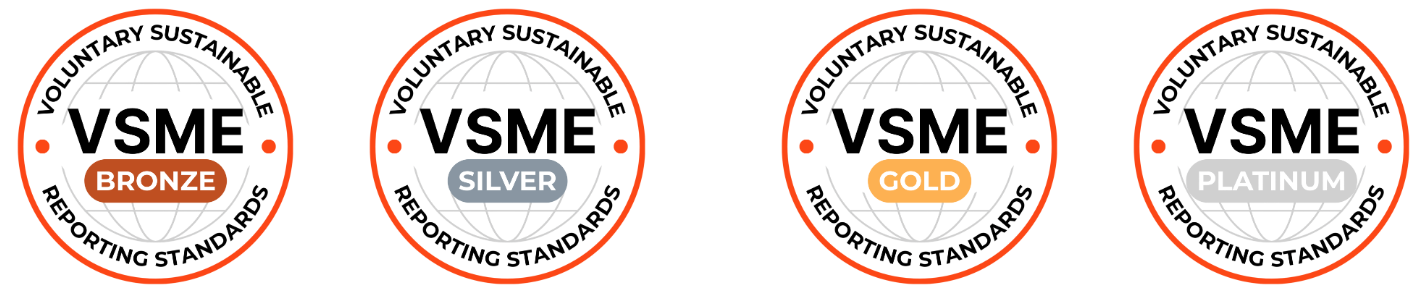
The VSME Medals are designed to evaluate the ESG maturity level of companies, including suppliers, based on a structured set of criteria.
Each level, Bronze, Silver, Gold, Platinum corresponds to a progressive level of ESG practices implemented.
This makes the framework particularly useful for supplier engagement.
Instead of asking generic questions, companies can:
assess where each supplier stands in terms of ESG maturity
compare suppliers on a consistent basis
identify what is missing to reach the next level
In other words, it allows you to answer two key questions:
- Where do my suppliers stand today?
- What do they need to improve to go further?
This creates a much more actionable approach than traditional questionnaires.
It transforms supplier engagement from a simple data collection exercise into a clear progression path.
Want to check where you or suppliers stand on the ESG maturity?
Why Engaging Suppliers Is Also a Strategic Advantage
Beyond compliance and ratings, supplier engagement can generate real strategic benefits.
Companies that structure their supply chain ESG approach often gain:
better resilience in their value chain
improved credibility with investors and banks
stronger ESG ratings
improved client trust.
And one key question remains.
If your suppliers represent most of your impact, can your ESG strategy really be credible without them?
Why ESGlogic?
At ESGlogic, we support companies across Belgium and Europe to structure practical ESG strategies.
Our approach combines:
supplier ESG questionnaires
supplier codes of conduct
responsible procurement policies
support for frameworks such as EcoVadis, B Corp and VSME.
The goal is always to make ESG practical, structured and measurable.
Supplier engagement is one of the most powerful levers to move from ESG intentions to real impact across the value chain.
Want to structure your supplier ESG strategy?
Frequently Asked Questions
-
Because a large share of environmental and social impacts occurs in the supply chain. Engaging suppliers helps companies manage ESG risks and improve overall sustainability performance.
-
It is a structured questionnaire used to collect information about suppliers’ environmental, social and governance practices.
-
Yes. Frameworks such as EcoVadis and B Corp evaluate how companies monitor and engage their suppliers on sustainability topics.
-
Yes. Frameworks such as the VSME standard provide a practical level of ESG information that SMEs can request from suppliers.
-
A good starting point is mapping key suppliers, sending an ESG questionnaire, implementing a supplier code of conduct and analyzing the results.