

ESG Videos to Decode Key Sustainability Topics
Short one minute video capsules covering ESG challenges, regulatory updates and sustainability news in a clear and practical way.
-
 • 23/07/2025
SBTi (Science Based Targets initiative)
Clarifying your SBTi pathway step by step
In this episode, we address a common frustration: companies want to commit to SBTi, but feel lost in the terminology and processes.
The Science Based Targets initiative validates corporate climate targets aligned with IPCC scenarios and the 1.5°C goal of the Paris Agreement. But between Near Term targets, Net Zero targets and SME versus Corporate pathways, the framework can feel complex.
We start by simplifying. Near Term targets focus on 5 to 10 year reductions, often around 2030. Net Zero targets set a long term trajectory towards 2050. SMEs benefit from a simplified route adapted to their size.
By mapping the options and their implications, ambition level, constraints and strategic benefits, companies can choose a trajectory aligned with their business roadmap.
SBTi is not a box to tick. It is a strategic lever when combined with a robust and realistic transition plan.
-
 • 11/08/2025
New B Corp Standards
Understanding the shift in the new B Corp standards.
In this episode, we explain why the updated B Corp framework has changed the game.
There are no more points or Impact Business Models. Instead of reaching 80 points across five pillars, companies must now meet defined requirements across foundational criteria and seven impact areas, with a strong focus on continuous improvement.
Our approach is simple: break down the standards, conduct a clear gap assessment, engage teams early and build a structured action plan with a realistic timeline.
With the right preparation, this complexity becomes a strategic opportunity rather than a source of uncertainty.
-
 • 21/08/2025
Investors want proof not promises.
Why investors expect proof, not promises.
In this episode, Maxime highlights a clear trend: investors no longer rely on ESG labels or marketing claims. They want transparent, verifiable data.
We help companies structure their reporting, through CSRD or VSME depending on their size, to build reliable indicators and create a common language with investors.
Our advice: start with three key ESG metrics that matter to your stakeholders and make sure they are accurate and auditable. Transparency on a few solid indicators is more powerful than vague ambition.
-
 • 30/09/2025
Certification VS. Impact
Why certification is a lever, not a strategy.
In this episode, Laurane talks about the role certifications play in an ESG journey.
Many companies want a certification quickly. While it strengthens credibility and visibility, it is not a strategy on its own. What truly matters is the structured action plan behind it.
With evolving standards from B Lab or frameworks like the CO2 Performance Ladder, the focus is increasingly on continuous improvement and measurable impact.
At ESGlogic, we make sure your ESG roadmap can translate into credible recognition when relevant. Certification is not the end goal. It is a tool to showcase real progress.
-
 • 29/10/2025
The S Pillar from ESG
Why the “S” pillar can no longer be overlooked ?
In this episode, Camille focuses on the often forgotten pillar of ESG: the social dimension.
Companies talk about carbon, reporting and governance. But rarely about people. Yet the S pillar is what makes the other two sustainable. It covers health, safety, training, diversity, inclusion and overall employee wellbeing.
You cannot build a credible ESG strategy without addressing the human impact behind it.
At ESGlogic, we help organisations reconnect leadership vision with on the ground reality. Our S Journey is not a label, but a practical approach: we listen, compare perceptions, identify gaps between strategy and lived experience, and turn those gaps into targeted and measurable social actions.
You already measure your emissions. It may be time to measure your human impact as well.
-
 • 16/12/2025
Green Claims
Why green claims are now a compliance issue ?
In this episode, Céline addresses a growing risk for companies: green claims.
In 2025, calling a product “green”, “sustainable” or “carbon neutral” is no longer just a marketing choice. With stricter EU rules and the upcoming Green Claims Directive, companies must substantiate every environmental statement with clear methodology, scope and evidence.
Without proof, these claims expose businesses to legal, financial and reputational risks. Marketing teams in particular must rethink how they communicate to protect brand credibility.
Our solution is simple: map your claims, assess their compliance with European requirements and reformulate your messaging so it is factual, transparent and aligned with your ESG evidence.
Communicate only what you can prove, and always prove what you communicate.
-
 • 19/01/2026
Carbon Footprint and the Next steps.
Why your carbon footprint is not the end goal
In this episode, Raïssa explores why many companies want a carbon footprint but struggle to use it strategically.
A carbon footprint measures all emissions across your operations and value chain. It is the foundation of your climate strategy, but the real challenge lies in choosing the right methodology, structuring data and making the results actionable.
We support you from framework selection to data collection, and most importantly, we translate the numbers into priorities, quick wins and concrete reduction targets integrated into a clear transition plan.
Measuring is step one. Turning insight into action is where real impact begins.
-
 • 14/10/2025
Transition Plan
What is a transition plan and why does it matter?
In this episode, Aline clarifies what a transition plan really is and what it implies for your business in practical terms.
A transition plan, aligned with VSME principles, is your roadmap towards a low carbon business model. It defines how you will reduce your CO₂ emissions, over what timeline, with which resources, and how you address both physical and transition climate risks that could impact your operations.
We explain how this requires identifying priority emission sources and climate risks, setting measurable targets and implementing concrete actions, from upgrading equipment to rethinking energy intensive processes or engaging suppliers.
More than a compliance exercise, a transition plan is a strategic steering tool. It strengthens credibility with investors, reassures clients and aligns teams around a clear trajectory.
At ESGlogic, we help organisations build transition plans grounded in operational reality, turning climate ambition into structured decisions, risk management and long term performance.
-
 • 06/08/2025
The Small Daily Gestures
Why small daily actions matter in your ESG journey
In this episode, Aline challenges the idea that small everyday actions do not make a difference in a company’s ESG transition.
No, small gestures alone will not drastically reduce your CO₂ emissions or solve structural inequalities. But they are powerful cultural levers.
We explain how these actions trigger awareness at an individual level, create motivating quick wins that engage teams, and make ESG commitments tangible beyond boardroom decisions.
When waste policies apply not only to production sites but also to offices, when sustainability becomes part of daily habits, ESG shifts from strategy to shared culture.
Small actions are not technical solutions. They are the starting point of collective transformation.
-
 • 10/07/2025
The VSME (Voluntary Reporting Standard for SME's)
Why VSME matters even without a CSRD obligation
In this episode, Laurane addresses a common reaction since the Omnibus updates: “We are no longer concerned by CSRD, so we can pause.”
But removing the obligation does not remove market expectations.
We explain how VSME, developed by EFRAG at the request of the European Commission, provides a voluntary, lighter and recognised ESG reporting framework designed for SMEs.
VSME helps you respond to ESG requests from CSRD exposed clients, strengthen credibility with banks and investors, and structure your sustainability strategy within a clear and actionable framework.
It may not be mandatory, but it is a smart way to prepare for what comes next.
-
 • 11/02/2026
The CBAM (Carbon Border Adjustment Mechanism)
What does CBAM change for your imports?
In this episode, we explain the Carbon Border Adjustment Mechanism and what full implementation since January 2026 means for companies importing carbon intensive goods such as steel, aluminium, cement, fertilisers, electricity or hydrogen.
Importers must now report verified carbon data and purchase CBAM certificates where no equivalent carbon price has been paid abroad.
Our approach helps you define your CBAM scope, structure supplier data collection and secure your reporting, so you stay compliant, avoid penalties and turn CBAM into a strategic tool rather than a regulatory burden.
-
 • 17/09/2025
The EUDR: European Deforestation Regulation
What does the EUDR really change for your business?
In this episode, Raïssa breaks down the European Deforestation Regulation and what it concretely means for producers, importers, exporters and distributors placing products on the EU market.
We clarify which products are concerned, what companies must prove regarding traceability and deforestation after 2020, and how the EUDR Information System works, including the difference between the ACCEPTANCE test environment and the legally valid LIVE platform.
Our approach focuses on helping companies structure their data collection, align suppliers, define clear internal roles and secure compliance before controls and sanctions begin, turning regulatory pressure into a structured and manageable process.
-
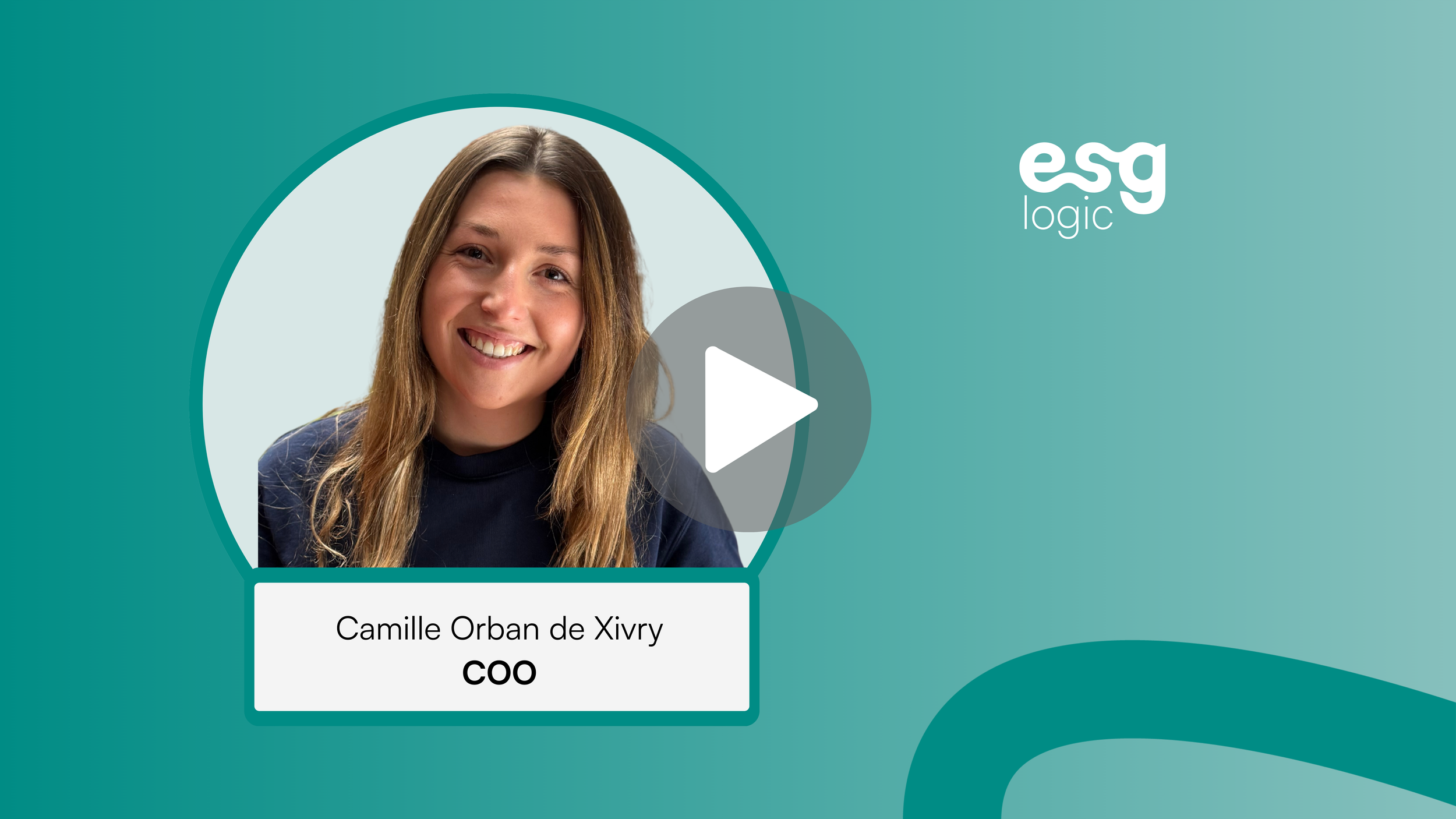 • 17/02/2026
Misunderstanding of ESG
Why is ESG still so misunderstood?
In this episode, Camille addresses the common misconceptions around ESG, who it concerns, whether it is only for leadership or SMEs, and why that thinking is limiting progress.
We explain why ESG is everyone’s responsibility, built around three interconnected pillars that impact every function in a company.
Our approach focuses on making ESG clear, structured and accessible, aligning teams from day one, formalising strategy and ensuring engagement starts at the very beginning of the journey, not one year later.