

B Corp in Belgium Is Entering a New Phase!
March is globally recognized as B Corp Month.
In Belgium, it comes at a pivotal moment.
A few years ago, the country counted around twenty B Corp certified companies. Today, there are more than one hundred, with visible momentum in Brussels, Flanders and Wallonia.
This growth reflects a deeper shift in how Belgian SMEs perceive their economic and societal role.
The new B Corp standards confirm that the movement itself is maturing.
B Corp is Raising the Bar, Including for Itself
Becoming B Corp is no longer about scoring points.
It is about meeting a higher and harmonized level of expectation.
What makes the B Corp certification framework distinctive is precisely this: it does not claim to be perfect. It acknowledges gaps. It evolves. It challenges companies to elevate their standards continuously.
This ability to “raise the bar” without dogmatism is central to the DNA of the movement and this is why we feel very much in line with the movement.
The approach is engaged, consultative and participative. It is built around continuous improvement, not static compliance.
That is why B Corp continues to gain traction across Belgium and Europe.
What Changed with the New B Corp Standards
The recent revision of the standards marks a real progression.
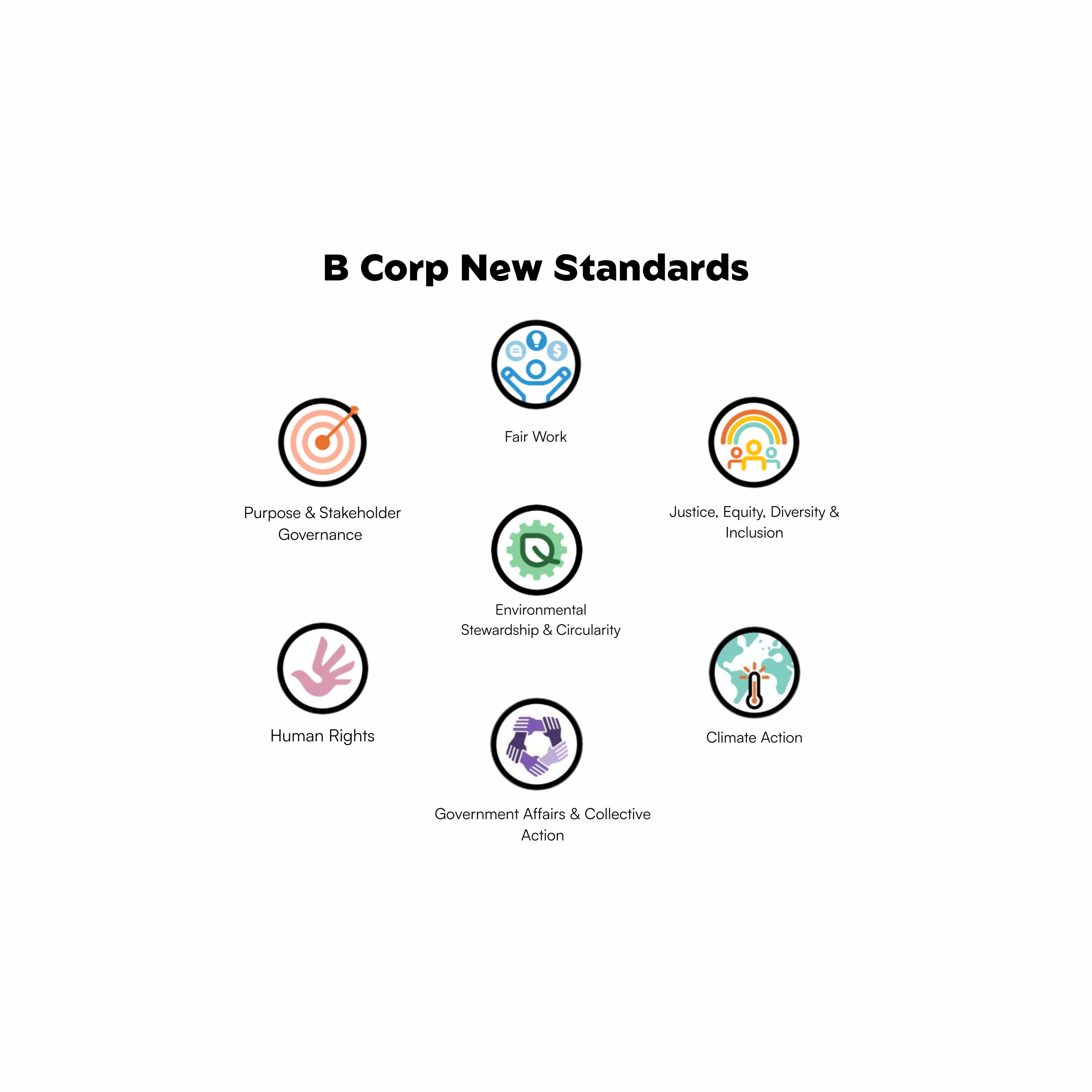
The transition from five to seven pillars is structural.
It gives stronger prominence to:
Equity, Diversity and Inclusion
Human Rights as a standalone pillar
Collective action and sector-level engagement
Clear minimum baseline expectations
The transformation cannot remain individual. It must become systemic.
For Belgian SMEs, this means B Corp certification now requires deeper structural alignment across governance, social impact and environmental responsibility.
Considering B Corp certification in Belgium?
A More Mature and Collective Environmental Vision
Another key evolution concerns the environmental pillar.
It is no longer limited to carbon footprint measurement.
It now fully integrates:
Interdependence within value chains
Collective responsibility in climate action
Accountability beyond direct operations
Understanding impact remains essential. Acting collectively, within and beyond one’s supply chain, is becoming equally decisive.
This evolution mirrors broader European ESG expectations. Impact is interconnected.
The End of the “À La Carte” Logic
The new B Corp standards put an end to excessive flexibility.
Companies can no longer focus only on the areas where improvement is easiest.
They must respond to a shared set of minimum requirements, adapted to:
Company size
Sector
Geographic context
This strengthens credibility and it also increases the importance of internal structure and documentation.
Independent Audit: Credibility Through Rigor
The reinforced independent audit process further consolidates the legitimacy of B Corp certification.
This matters even more in light of the EU Green Claims Directive (ECGT), entering into force in September 2026.
From that moment, companies will have to substantiate environmental claims with verifiable evidence and avoid vague sustainability messaging.
Want to prepare for September 2026?
Why Becoming B Corp Is Strategically Valuable for SMEs
Beyond certification, B Corp offers tangible business advantages.
For Belgian SMEs operating in competitive European markets, B Corp certification can:
Strengthen credibility with clients and procurement teams
Facilitate ESG conversations with investors and banks
Enhance employer branding and talent attraction
Structure governance and long-term strategy
Differentiate in tenders where sustainability criteria matter
In a context where transparency, accountability and verified impact are increasingly expected, certification functions as:
A governance signal
A credibility accelerator
A strategic positioning tool
For many SMEs, the real value is not the label itself. It is the internal transformation it structures.
How ESGlogic Supports the B Corp Journey
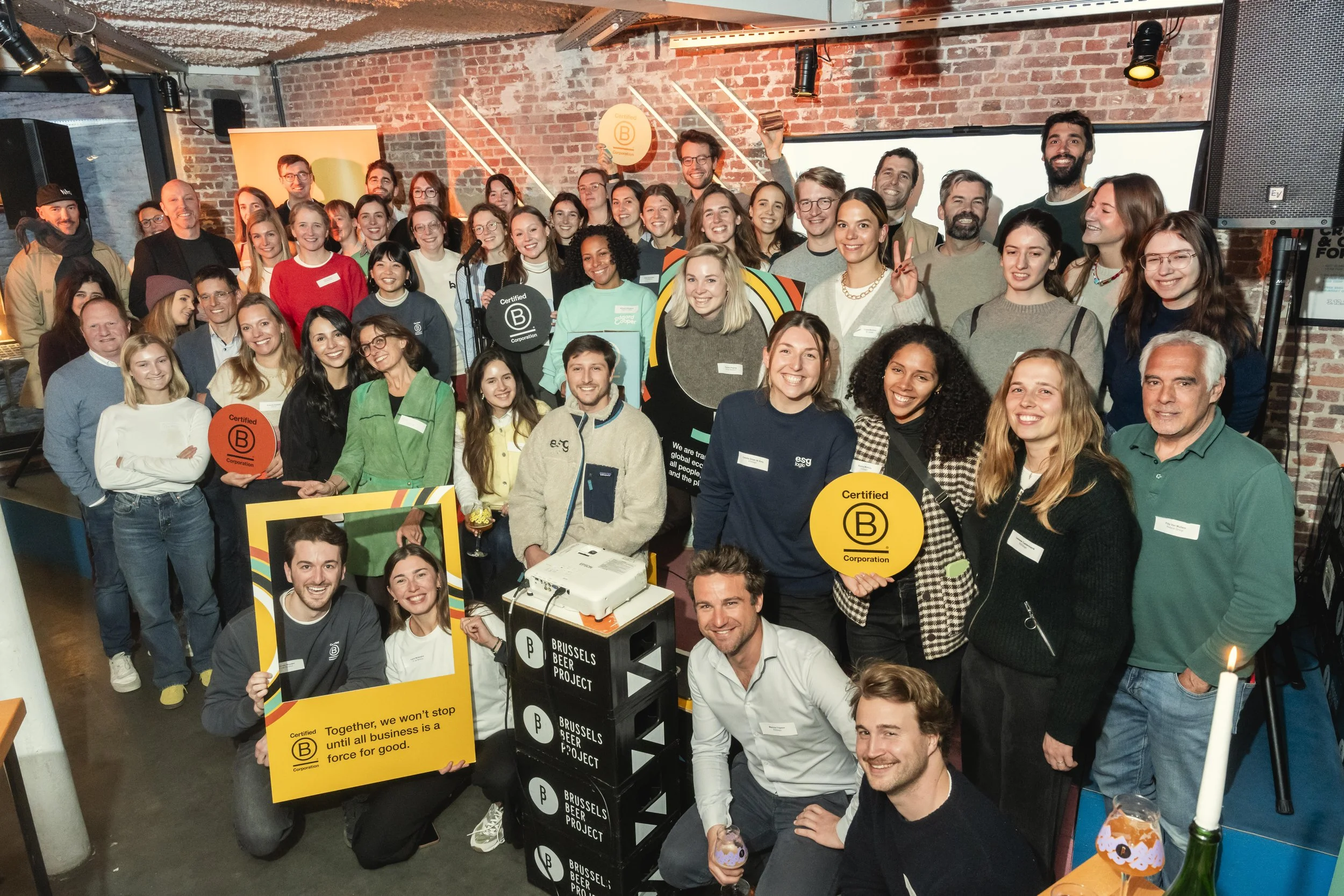
ESGlogic has supported approximately 10% of all B Corp certified companies in Belgium in their certification process.
This experience provides practical insight into:
How audit expectations are interpreted
Where SMEs typically encounter friction
How to anticipate structural gaps
How to align governance early
Support includes:
B Corp readiness assessment
Gap analysis against the new B Corp standards
Governance and policy alignment
Environmental and social structuring
Audit preparation support
The objective is to build a coherent and resilient trajectory.
In a nutshell, during B Corp Month, visibility increases.
But beyond visibility, expectations are rising.
The new B Corp standards elevate requirements across governance, human rights, EDI and environmental responsibility.
B Corp is not a final destination. It is an evolving framework designed to structure continuous progress.
For Belgian SMEs, the strategic question is readiness!
Not sure where you stand?
Frequently Asked Questions
-
No. It is voluntary. However, it increasingly influences market positioning and stakeholder credibility.
-
They expand the framework from five to seven pillars and introduce stronger baseline requirements across governance, human rights and environmental responsibility.
The new pillars are: Fair Work, Purpose & Stakeholder Governance, Human Rights, Government Affairs & Collective Action, Climate Action, Justice, Equity, Diversity & Inclusion, Environmental Stewardship & Circularity.
-
B Corp Certification project timelines vary widely depending on resources dedicated to the project, operational complexity, target deadlines, marketing considerations, and other strategic objectives.
Timelines can range from three months to a few years, as some companies choose to delay certification in order to maximize their B Impact Assessment score, while others apply and begin the certification process as soon as they reach the 80-point threshold that is the minimum for certification.
Please note that timelines are approximate and subject to change based on submission rates and B Lab’s capacity.
-
While voluntary, it increasingly reflects broader European trends in transparency, accountability and climate responsibility.