


Carbon Footprint Assessment Services
We help companies quantify emissions, comply with European ESG regulations and build actionable reduction strategies aligned with CSRD, VSME and Science Based Targets initiatives.
Why a Carbon Footprint Assessment Matters?
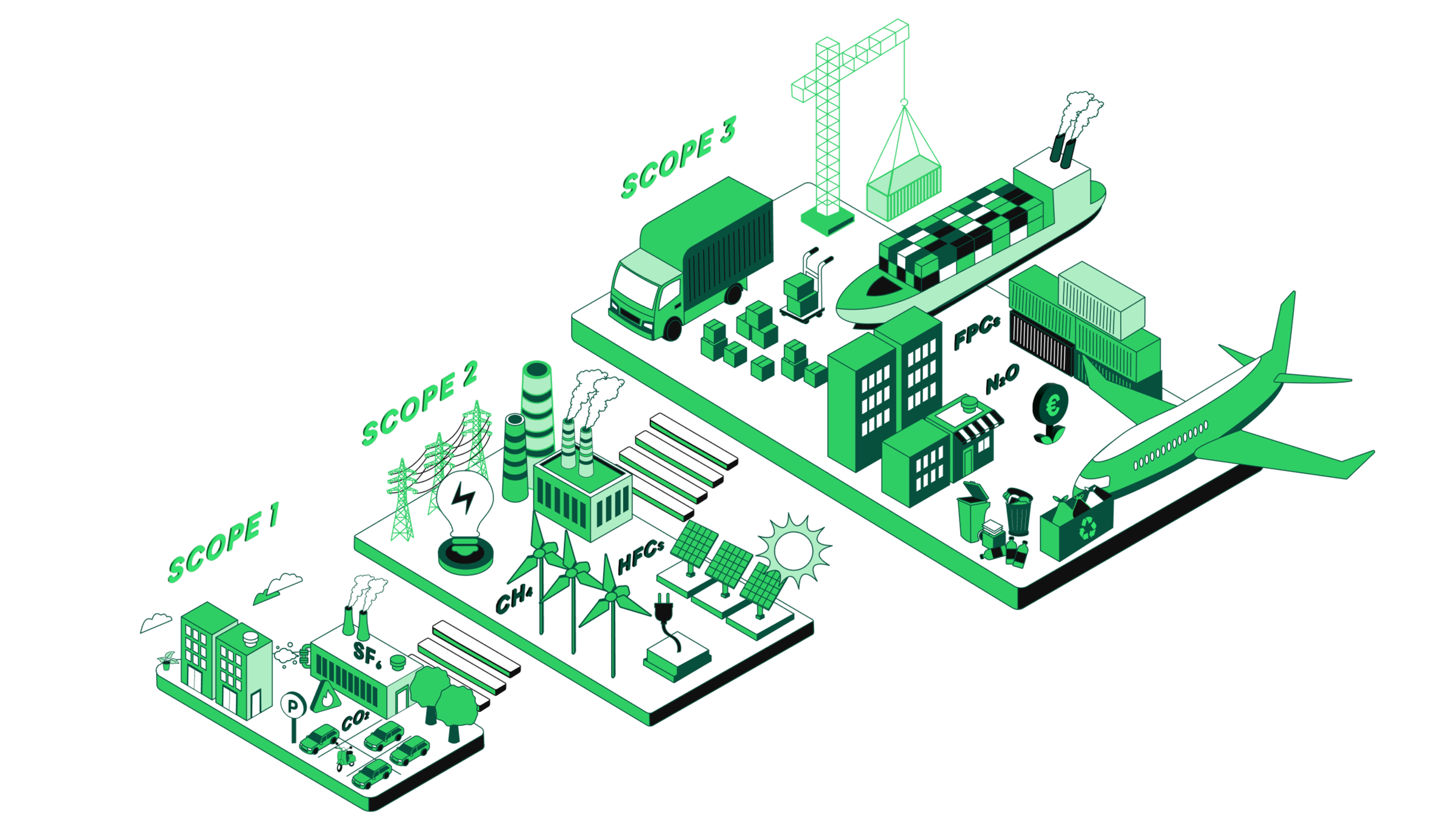
A carbon footprint assessment is the starting point of any effective climate strategy. It measures greenhouse gas emissions across Scope 1, 2 and 3 and provides the data needed to structure compliance, reduction targets and long term decarbonization plans.
It can:
Comply with regulations, subsidies and meet stakeholder expectations
Build a resilient, responsible and more efficient organization
Attract and retain clients, talents and investors
Is directly linked to recognised ESG frameworks and certifications
Anticipate risks and evolving market dynamics

Is your company concerned?
Our consultants are trained in recognized carbon accounting standards and methodologies like ADEME or GHG Protocol. We adapt each carbon footprint assessment to your sector, organizational complexity and level of ESG maturity.
We offer flexible working models, including:
Simplified or free carbon calculation tools
Advanced carbon accounting platforms
Integration with ERP or internal data systems
You choose the tool and level of depth. We ensure methodological rigor, regulatory alignment and actionable outcomes.
Our Carbon Accounting Approach
Our consultants are trained in recognized carbon accounting standards and methodologies like ADEME, GHG Protocol, ISO, etc. We adapt each carbon footprint assessment to your sector, organizational complexity and level of ESG maturity.
We offer flexible working models, including:
Simplified or free carbon calculation tools
Advanced carbon accounting platforms
Integration with ERP or internal data systems
You choose the tool and level of depth. We ensure methodological rigor, regulatory alignment and actionable outcomes.
Discover our Carbon Footprint Processes
-
Simplified Free Tools
Excel models and public carbon calculators for organizations seeking a cost efficient and autonomous solution.
A pragmatic entry point with guided methodology. -

Carbon Platforms
Structured solutions such as Greenly or Tapio, offering centralized data management, recognized emission factors and easier reporting.
Ideal for companies seeking efficiency and scalability. -

Integrated ERP
Carbon accounting embedded directly into your ERP system.
A fully integrated and long term solution linking operational data with climate performance.
Our Structured Approach
-

Phase 1: Kickoff
We start by:
• Selecting the right methodology based on your context and objectives
• Choosing the most suitable tool for your organisation
• Coordinating and managing the data collection process across departments and subsidiariesObjective: establish a clear ESG baseline and define a structured action plan aligned with your priorities and stakeholder expectations.
-

Phase 2: Data collection
• Collect and consolidate financial and physical data
• Integrate employee questionnaire dataObjective: build a reliable carbon data baseline.
-

Phase 3: Processing and analysis
• Validate and categorize data
• Calculate emissions (Scopes 1, 2, 3)
• Identify key reduction leversObjective: obtain a clear and accurate carbon footprint
-

Phase 4: Validation and action plan
Finally we:
• Validate results and reduction targets
• Present final carbon assessment
• Define next steps and roadmapObjective: turn results into a concrete transition plan
The advantages for your company ?
Benefits of conducting a carbon footprint assessment:


Why choose ESGlogic ?
Companies choose ESGlogic because we:
Really know which methodology and tools to use for each context
We ensure reliable data collection across teams and entities
We translate carbon results into a clear and actionable reduction roadmap
We align your carbon strategy with broader ESG and market expectations
We support you from first measurement to long term performance improvement
We build workable carbon systems.
Frequently Asked Questions
-
A carbon footprint measures the total greenhouse gas emissions generated by a company’s activities, including direct operations and indirect emissions across its value chain.
-
For some companies, carbon reporting is required under broader ESG regulations. For others, it is increasingly requested by clients, banks and partners as part of ESG assessments and tenders.
-
Scope 1 covers direct emissions from owned sources.
Scope 2 covers indirect emissions from purchased energy.
Scope 3 includes all other indirect emissions across the value chain, such as suppliers, transport and business travel. -
It depends on company size and data availability, but most projects range from a few weeks to a few months, including data collection, analysis and validation.
-
The results are used to define reduction targets, prioritise actions and build a structured transition plan aligned with your business strategy.
-
We define the right methodology, select the appropriate tool and manage data collection across departments to deliver a reliable footprint and a concrete reduction roadmap.

Raïssa Montois
ESG Consultant - Head of Climate
Want to start building a clear, reliable picture of your emissions?
Raïssa will guide you!